
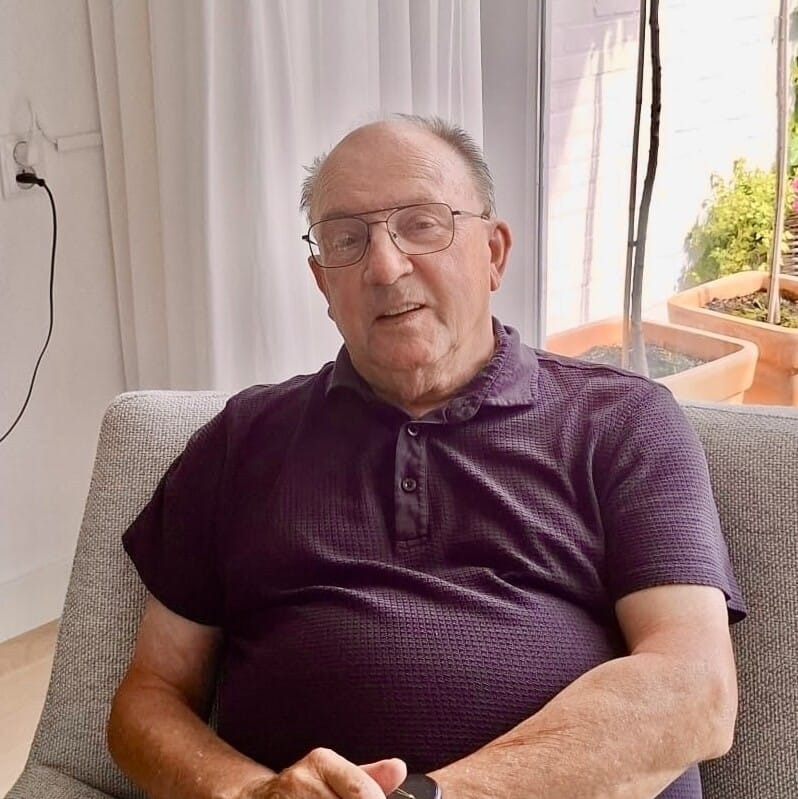
A year ago, Piet (74) was sitting at the breakfast table with his wife after a pleasant evening with former colleagues. Suddenly he asked, “Are they doing construction nearby?” He heard trucks, a low rumbling, as if something big was going on. But his wife heard nothing. It turned out to be the beginning of a persistent, one-sided tinnitus sound that firmly settled in his right ear. “I also sleep on my right side, so lying on the pillow was sometimes just unbearable.”
From pillar to post
Piet went to his general practitioner. There wasn’t much they could do for him, except explain that he wasn’t the only one. “But that doesn’t help you in that moment, right? No one can help you.” He tried earplugs, searched online, and visited a hearing specialist who offered an expensive device that was supposed to suppress the sound. But he didn’t buy it: “I thought, let’s be sure first. Maybe there’s something else that works.”
Through his GP, he ended up in a tinnitus treatment group in Hoensbroek, where he had an extensive intake and eventually participated in a 35-day group course. “The first few times I came home quite enthusiastic. There were people from all over the country—even someone from Rotterdam. Then you think: this has to be good.”
But it turned out not to be the right approach for him. “Yoga was a big part of it, but I couldn’t relax. I have balance issues, and lying on my back makes me dizzy. I just couldn’t find my footing there. That’s on me, not the course. Because I truly believe it’s a good one.”
A tip from an unexpected source
Some time later, his sister-in-law called him. She had seen a segment on TV about a new app: Freequency. Piet decided to give it a try. “I signed up, downloaded the app, and then I started using it seriously every day.” After about sixty sessions, he suddenly noticed a difference. “I had days where I didn’t think about it. And then I’d realize: hey, it’s still there, but I don’t notice it.”
Piet combined it with sessions at a chiropractor, which also felt right for him. Eventually, he completed a hundred sessions in the app. “I kind of clung to it, I think. And now I’ve had absolutely no trouble with tinnitus for at least a month.”
Not sure where the success comes from
“And whether that’s because of your app or not, I don’t know. But it definitely contributed.” Piet suspects it was a combination with the other treatments, but for him the role of Freequency is positive. “I’m just going to keep using it. I’m not stopping, not even after a hundred times. It’s part of my routine. And if I haven’t played for a day or two, I think: I’ll just do it again for ten minutes. It feels good while I’m doing it, and after I’ve done it.”
He also appreciated the guidance: “I now understand a bit how it works. You reassure your brain: the sound is there, and I don’t have to do anything with it. It’s all little tricks for your brain. And I think it’s really cleverly designed.”
A message to those in doubt
At the end of the conversation, we asked Piet if he had anything to say to people who are unsure about using Freequency. His answer was clear:
“Of course I have a message. For a few euros a month, you should just try it. I know how bad it can be. In the group, there were people who were completely broken by it—people who said they didn’t want to live anymore. And then you think: if you, like me now, no longer suffer from it—then you can only be grateful. Maybe it’s the app, maybe not. But it’s worth trying.”