

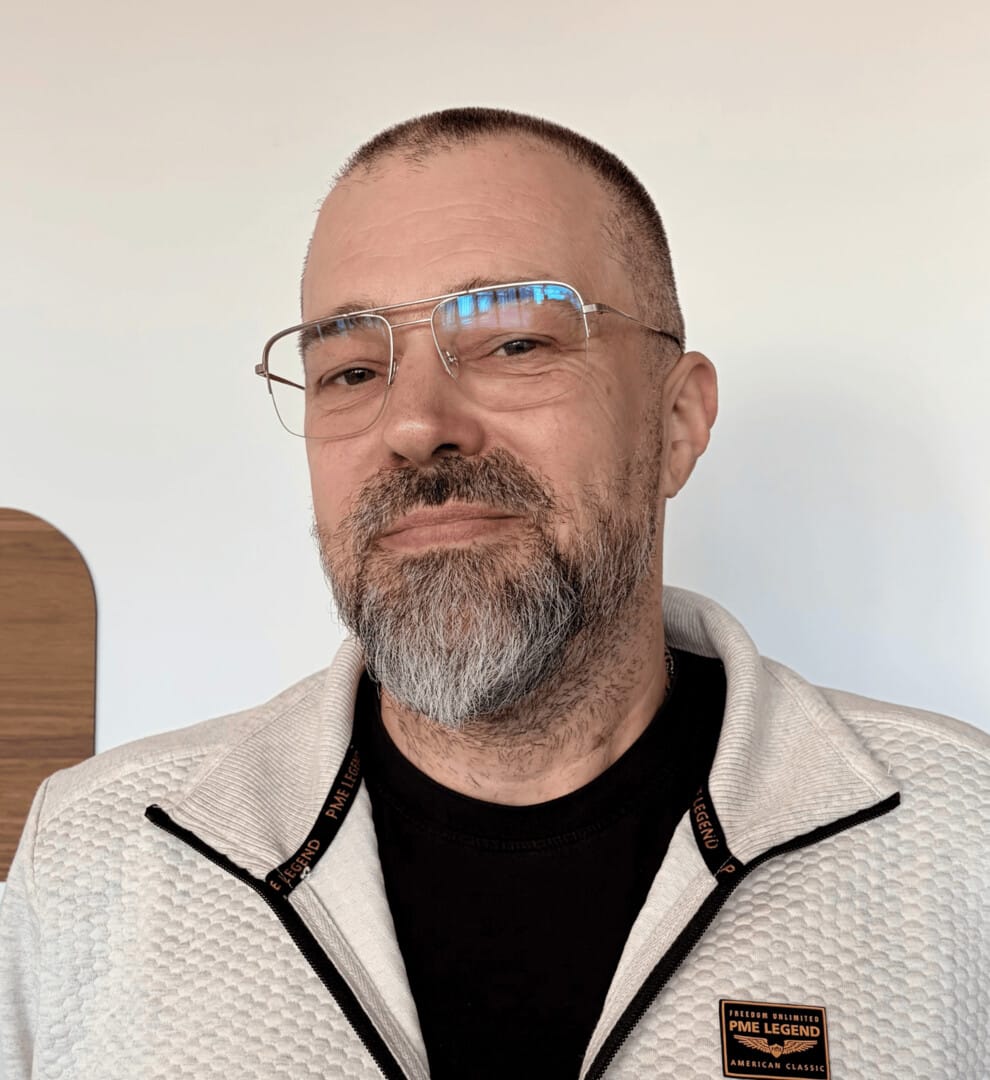
A few years ago, Ries began to notice that something wasn’t right. Every now and then, he would hear a high-pitched ringing sound, like many people occasionally experience. But this time, it didn’t go away. “At some point you think: hey, this isn’t going away anymore.” What started as something minor gradually turned into a constant, sharp tone that was present day and night. “I hear it all the time. Just as loud as we’re talking right now.”
During a period of illness, it became unbearable. “I was lying on the couch for two weeks thinking: what am I supposed to do with this? If this stays like this, how am I going to live with it?” Sleeping became difficult, and Ries grew increasingly tense. “You’re tired, exhausted. You just don’t function anymore.”
Search for relief
Ries started looking for solutions. He searched online, visited his general practitioner, and consulted a hearing specialist. “Everywhere you read the same thing: there’s nothing you can do about it. That’s a tough pill to swallow.”
He discovered that his tinnitus was likely linked to years of exposure to loud noise, both through his work and his music habits when he was younger. But his search didn’t lead to any concrete solutions. “You can keep searching, but it’s not going to go away.”
He began asking around and realized that tinnitus was more common than he had thought. He also noticed how differently people cope with it. “I know someone who is constantly fighting it. But that doesn’t work. You can’t fight something that won’t go away.”
A tip from someone he knew
Through an acquaintance, Ries came across the Freequency app. “I thought: I’ll just put it on my phone and give it a try.” He quickly understood the concept. “You teach your brain that the sound is simply there. That it’s not dangerous. That you don’t need to do anything about it.”
He started using it daily, at a fixed moment in the day. “Just ten minutes of rest on the couch. That became my moment, after which I’d always take a half-hour nap.”
After a few weeks, he already noticed a difference. “Not that the ringing was gone, but it bothered me less. That actually starts right away once you understand what you’re doing. Like the little bird, you let your ringing go.”
Gradually, his response to the sound changed. Where it used to create tension, he could now let it go more easily—especially at night, when it used to trigger panic. “You feel it coming up, you get startled, and then you think: just let it go. And then it fades back into the background.”
Rest and routine
By now, using the app has become part of his routine. “It’s just in my system. I do it every day.” Proudly, Ries shows his streak of nearly 400 days. “When I say I’m going to do something, I follow through.”
The ringing is still there, but it feels different—less threatening, less present. “It’s there, but the disturbance is gone.”
According to Ries, the key lies in understanding what’s happening and what you’re actually doing when you start using Freequency. “If you understand that you’re training your brain, not trying to eliminate the ringing, then you can let it go.”
A message to those who doubt
We asked Ries what he would say to people who are hesitant to start using Freequency. His answer: “I wouldn’t hesitate. But do read carefully what the intention is. Understand what you’re going to do.”
He emphasizes that it’s not a quick fix. “The ringing won’t go away. You have to be honest about that. But you can learn to deal with it differently.” His advice is simple: “Stay calm. Do it in a relaxed state. And give it time. Once your brain understands it, it really does get easier.”
He adds that it won’t work for everyone, since everyone deals with tinnitus differently. “I’m glad I started doing it. For me, it’s made things much more manageable.”