

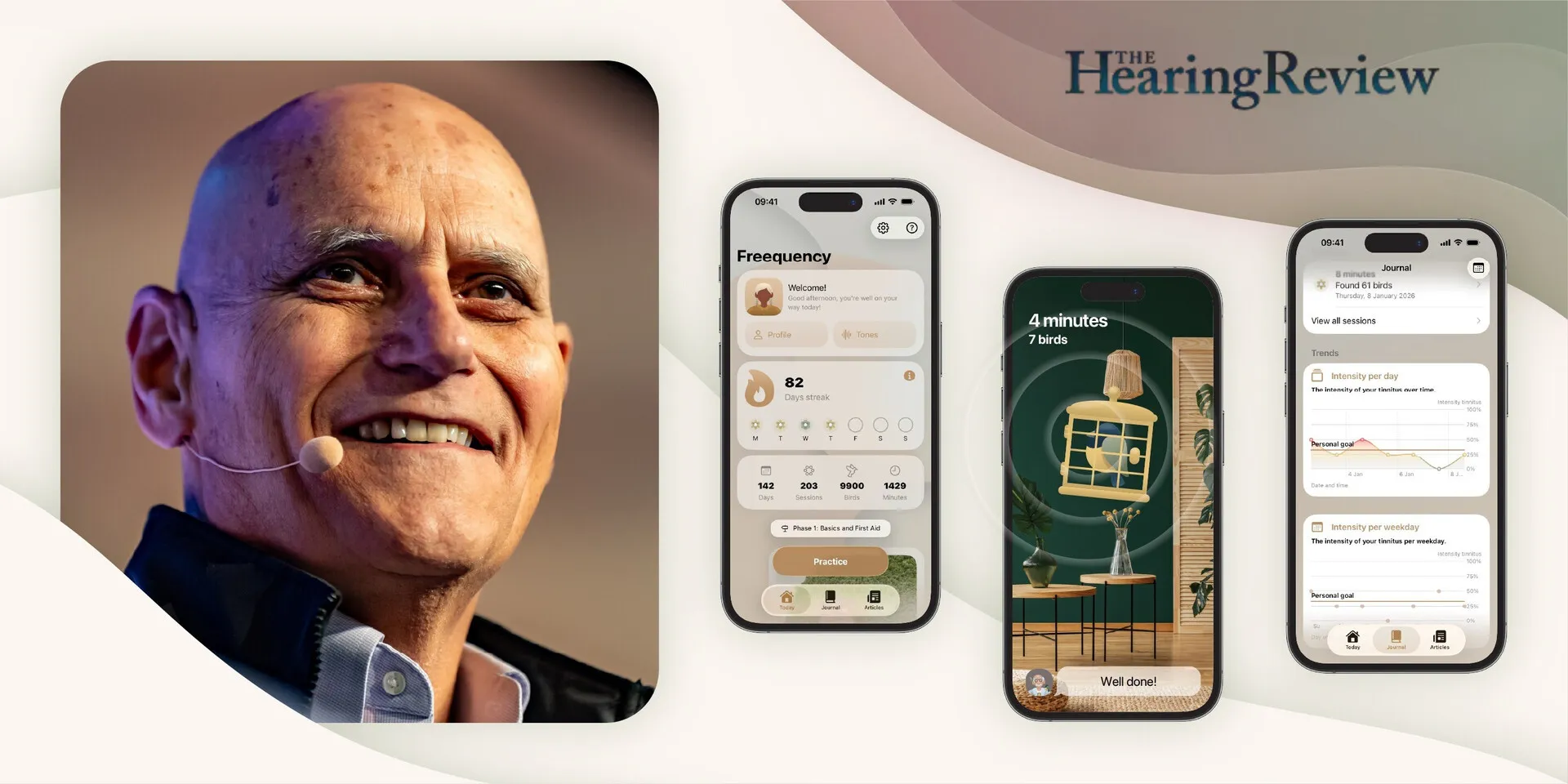
Freequency has been featured in The Hearing Review, one of the most widely read publications in American audiology. The article, published on April 27, covers our launch in the US market and the scientific approach that sets Freequency apart.
A different approach to tinnitus
Most tinnitus solutions focus on masking the sound. Freequency takes a different route. Through short daily sessions using augmented reality and spatial audio, the app guides users to actively engage with their tinnitus — rather than avoid or suppress it. The therapeutic principles behind this are drawn from exposure-based therapy, Cognitive Behavioral Therapy (CBT), and Acceptance and Commitment Therapy (ACT). The goal is not to make the tinnitus disappear. It is to change the relationship with the sound. As Steven Hayes puts it: "Exposure allows people to respond more flexibly to tinnitus. The aim is not to remove the sound, but to change the relationship to it."
Recognition from the audiology field
Getting covered by The Hearing Review matters. It is a publication read by audiologists, researchers, and hearing care professionals across the United States — exactly the audience we are working with as we expand. The article reflects a broader shift in how the field is thinking about tinnitus: less focused on eliminating it, more focused on reducing its impact on daily life.
Strong scientific backing
The article also highlights the clinical advisory board that has come together around Freequency. Steven C. Hayes, PhD — founder of ACT and one of the most cited psychologists in the world — joined earlier this year. He is joined by Gerhard Andersson, PhD, a leading researcher in CBT for tinnitus, and Jan de Laat, PhD, clinical physicist–audiologist, who brings expertise from the audiological field. Together, they provide a strong scientific foundation as Freequency moves into the US market.
We are proud to be recognized by The Hearing Review and look forward to sharing more as the pilot progresses.
Curious to read the full article? Read it here! https://hearingreview.com/hearing-loss/tinnitus/tinnitus-app-using-act-and-cbt-principles-to-enter-us-market