

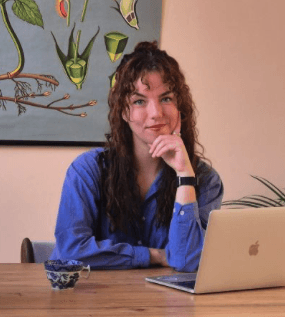

Mike O. is 63 and has lived with tinnitus for about 15 years. As a tech entrepreneur he has started and run several companies, so he is used to solving problems. Tinnitus is one he has not solved yet. Mike’s story is one that many people run into: good hearing care, but no care for tinnitus specifically.
Loud places
In the early 1980s Mike worked in a loud restaurant and went to concerts without ear protection. At the time, his hearing was fine. In his mid forties, his hearing started to decline, and the tinnitus came with it. His father also has hearing loss, so genetics may play a part. The hearing loss crept in slowly. His wife noticed it first, when he could no longer hear her from the next room. The tinnitus was harder to miss. "Besides the hearing loss, at all times, the tinnitus is the loudest thing in the room. Even on an airplane." He describes it as a harsh, high tone that never goes away. It gets worse when he is tired. "If I think about it hard, it makes me sad and angry," he says. "I can't really ignore it, but I'm used to it." As an engineer, he finds the lack of progress hard to accept. "We can put rovers on Mars and design mRNA vaccines. What is going on with the research into my ears?"
Nothing for the tinnitus
For a long time Mike avoided going to the audiologist. "I was afraid the audiologist would tell me I was going deaf." When he finally went, his GP pointed him to an audiologist. He got hearing aids, and they made a big difference. He can now hear in most places. When he asked about the tinnitus, the answer was always the same: there is nothing to be done, you have to live with it. That answer has not changed in fifteen years. "I like my doc. I think she's great. But with this one bad problem, she's really not that helpful." He sees his audiologist once a year to track his hearing and fine tune his hearing aids. The care is focused on what can be fixed. "If she ever told me, hey, we've got an approach that seems to make a difference for your tinnitus, I would be all in. I would go every day." Cost is another barrier. His insurance covers none of his hearing care. Each of his hearing aids costs about as much as a laptop. Mike can afford it, but he knows many Americans cannot. He sees over the counter hearing aids as a step forward,, but they do nothing for tinnitus.
Doing your own research
With no help from the system, Mike did his own research. "I'm a nerd, so I read obsessively. I was sure I was going to find a treatment. I was shocked and angry when I discovered that there is none." He read scientific papers about how tinnitus works. He looked into experimental treatments abroad, but none were offered in the US. He even tried a trick he found online: tapping the back of his neck to make the sound fade, but it did nothing. "Anytime I find any kind of quick cure, I'm super skeptical. I'm sure it won't work, but I do it anyway. I would love to be surprised one time."
A different outlook During our conversation we told Mike about Freequency. Our approach does not try to remove tinnitus, but it helps people change how their brain responds to it. Users recreate their own tinnitus sound in the app and meet it every day for 100 days, in short and playful sessions. The idea is that the brain slowly stops treating the sound as a threat.
We were also clear that it does not work for everyone, and that the sound can feel worse at first. Daily messages from a professional guide users through those moments. That approach appealed to him. "I find it constantly annoying. If I find some mechanism to change my stance toward this thing, maybe that would help." The ups and downs did not put him off. "My brain and my personality like to work on problems. If it fluctuates over time, that's okay."
Mike’s story is one of many. Tinnitus brings stress, but also the drive to keep looking for relief, often in a healthcare system that does not make it easy. Freequency does not promise to make the sound disappear. It helps you learn to live with it, so tinnitus takes up less space in your life. Does this sound familiar? We are currently inviting a small group of people to use Freequency and share their experience with us. Get in touch to see if Freequency is a good fit for you.