
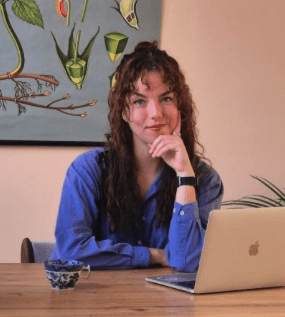
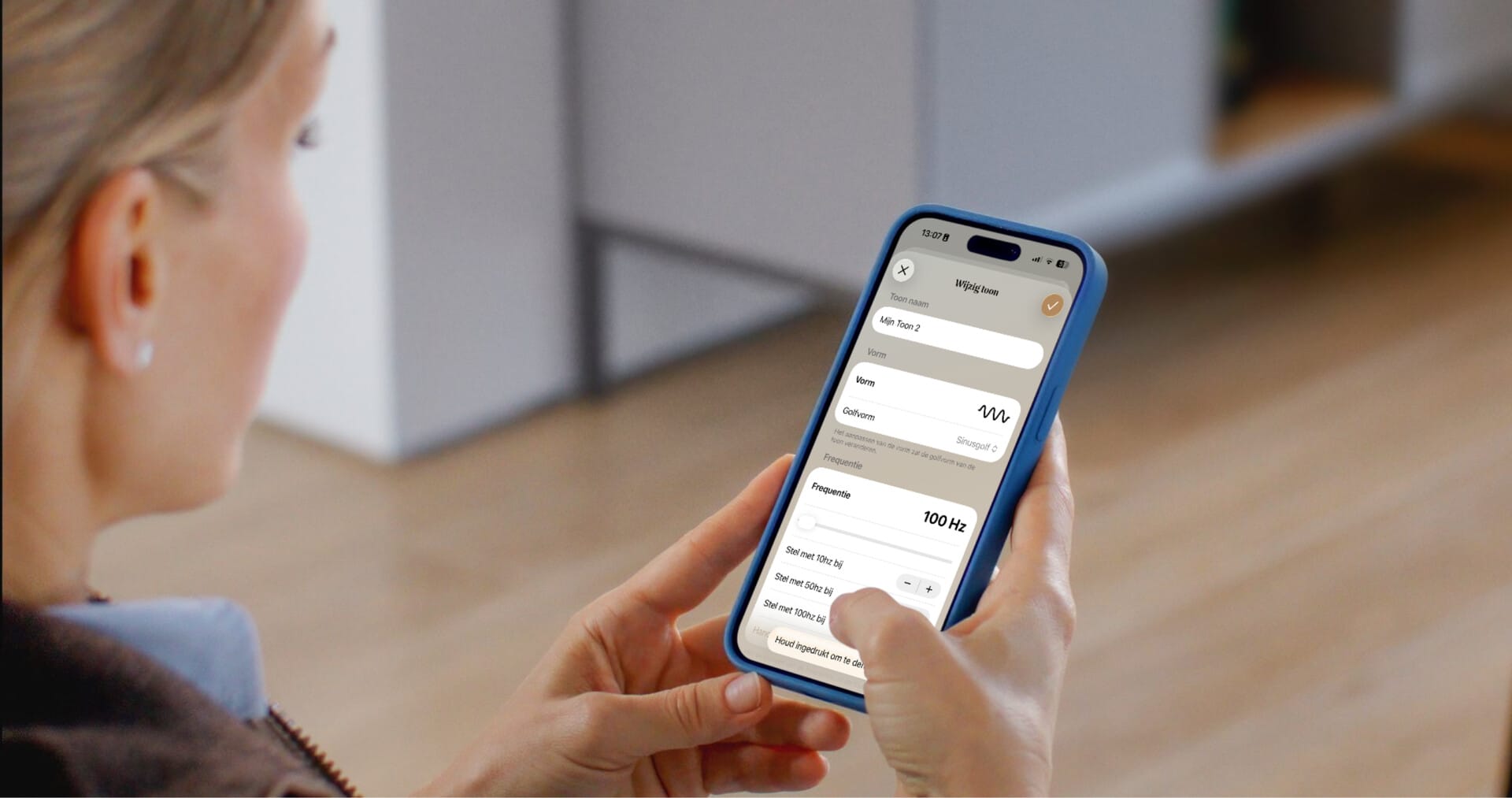
Nienke (65) has lived with tinnitus for fifteen years. She used Freequency for the full hundred days in search of something that would ease her symptoms, but unfortunately that didn't happen. Her tinnitus didn't decrease, and halfway through she even temporarily developed a second, unsettling sound. Research shows that around a third of users notice a clear reduction in symptoms within four weeks. For the other group, like Nienke, there's a chance the impact of the sound doesn't change. That's exactly why her story is worth sharing.
Fifteen years of learning to live with a ringing sound
It started about fifteen years ago. "If I tilted my head slightly, I'd suddenly hear a ringing. If I held my head straight, it was gone again." At some point the sound became constantly present. She isn't sure where it came from, maybe the loud nights out from her younger years, maybe something else. She visited her GP and a hearing care clinic, where she was given an explanation of tinnitus and how to deal with it. "That's it. Just learn to live with it," she sums up the message. She'd long since found her own way of coping: yoga, mindfulness, and falling asleep at night with meditation. "If I don't think about it, it's not there. If I'm busy with other things, it's perfectly manageable." She doesn't panic over the sound. She's more likely to panic over mice in the utility room, she laughs.
It can't hurt to try
Nienke doesn't quite remember how she first came across Freequency. She hesitated over the cost but eventually decided: "It can't hurt to try. It can't get any worse, so anything that helps is a bonus." She started with good spirits and a firm intention to see the program through once she began. "Maybe it only starts working after eighty days. If they say a hundred days, then I'll finish those hundred days too."
Nienke's story fits a pattern that also emerges from Freequency's own clinical research. TFI (Tinnitus Functional Index) data shows that the largest reduction in symptoms usually occurs in the early stage of the program, after which improvement levels off. That doesn't mean this holds true for everyone, nor that no further improvement can occur after the first third of the program. But the trend does offer some guidance: it can help to consciously pause, at some point along the way, and consider whether the program is still adding value, or whether it's time to try something else.
Eyes closed, ears open
The first few times, Nienke played without headphones. She didn't understand what the exercise was for. As soon as she used earbuds, she could clearly hear the sound coming from the left or right, and could start searching for it. "That's really worth pointing out: you really do need to wear earbuds, otherwise you completely miss the point." At one point she closed her eyes to focus purely on the sound, which worked well for her.
An unexpected signal Halfway through the hundred days, a second sound appeared: a throbbing, pounding sound like a heartbeat, as if a blood vessel were pulsing. It genuinely scared her. "I just hoped there wasn't a blood vessel about to burst." She went back to her GP and an ENT specialist twice because of it. They found nothing abnormal, though it may have been related to jaw tension. Whether it was caused by the app, she isn't sure. The sound has since faded away.
Not negative, not positive Nienke completed the full hundred days and then stopped entirely. She's honest about the outcome: "Negative feels like a heavy word, but I'm certainly not positive about the result either." Still, she noticed something in herself: while playing, she kept setting herself a small goal, catching as many birds as possible per session. "I always try to catch about a hundred. Then I think: oh, I've already caught more than yesterday." The fact that she finished all hundred days, she says, has entirely to do with her own mindset and determination.
A message for those who are hesitant
Despite her own experience, Nienke is firm about what she'd say to people who are on the fence: "I would always urge people to try it out. Just because it didn't help me doesn't mean it won't work for someone else." She only welcomes Innovations like Freequency, "because there's already so little out there that works for tinnitus." She also appreciates that Freequency actively asks users for feedback: "The fact that you talk to users to find out what they think and what can be improved, I think that's really positive." She no longer uses the app herself, but doesn't rule out keeping an eye on it and how it develops.
Nienke's story isn't a success story, and that's exactly why we're sharing it here. Freequency doesn't work for everyone, not even for Nienke, and feedback from users like her helps us keep improving the app. Wondering if Freequency could work for you? Download the app for free and give it a try. Do you recognize Nienke's story, or have your own experience with Freequency? Share it in the comments. We use that feedback, positive or critical, to keep making Freequency better.